
Bruce G. Shapiro has been creating theater with iconicity since the early 1980s. He began articulating his ideas about it while on NEH summer stipends with W.J.T. Mitchell in 1988 and Herb Blau in 1990, and a Tufts University Summer Research stipend in 1993. He received his PhD from the Centre for Innovation in the Arts at Queensland University of Technology in Brisbane, Australia, where he wrote Reinventing Drama: Acting, Iconicity, Performance.
A post by Bruce G. Shapiro
"There are two requisites in every systematic treatise: the author must first define his subject, and secondly, though this is really more important, he must show us how and by what means we may reach the goal ourselves."
Longinus, On the Sublime
The two roles
The imagination plays two significant roles in stage acting. One role occupies rehearsal, where the actor imagines sensory experiences to create afferent data that informs their imagination. The second role occupies dramatic performance, where the actor's informed imagination efferently turns into a spontaneous appearance before an audience.
Trópos and opsis. In the Poetics, Aristotle used two concepts that describe these two roles: trópos, meaning a turn or change, and opsis, meaning face or appearance. As a transitional concept, trópos refers to the playwright's process of turning a drama into a playscript, and the actors' rehearsal process of turning the playscript's imagery into imagined sensory experiences. Opsis refers generally to the actors' performance of the drama before an audience. But the term literally means the drama's spontaneous appearance in a performance by actors, whose imaginations create the spontaneity.
Transition. The turn from rehearsal to performance is neither the natural consequence nor the effortless result of the rehearsal process. Rehearsal only leads up to the liminal frontier between it and the creation of a performance, which must be wholly the work of the imagination in the sudden presence of an audience.
Rehearsal: informing the imagination
Iconicity and rehearsal. A playscript is a closed set of iconicity recognizable as classes of signs. In rehearsal, the actor digs into the script to recognize its iconicity. The process follows a hermeneutic circle of recognition, which is to "understand the whole in terms of the detail and the detail in terms of the whole" and, thus, achieve the "harmony of all the details with the whole" (Gadamer, p. 258–259).
Afference. During rehearsals, the actors use their imaginations to create albums of iconicity for their roles. By imagining the iconicity as a series of sensory experiences, the actors generate the afferent data that informs the iconicity album.
Rehearsing the iconicity. In All's Well That Ends Well, the following line contains different strands of iconicity (see figure 1):
HELEN…May be the amorous count solicits her
In the unlawful purpose (3.5.68).
/May be/ is indexical. It leads the thoughts of the characters in a specific direction. The actor imagines this action as a sensory experience when she speaks the phrase. Her imagination of this action attaches itself to her memory of the line, just as it sends afferent information to the album of iconicity.
/The amorous count/ is an icon. The actor rehearses that bit of imagery by becoming the physical embodiment of the amorous count. Physicalizing creates a sensory experience of the icon that generates afferent data.
/The amorous count/ directly connects with the next image, /solicits her/, which is again indexical. The actor imagines the sensory experience of this action, which Bertram will later perform. Thus, it points to how Helen will entrap him "In the unlawful purpose."
/The unlawful purpose/ is a symbolic idiom for fornication, which is unlawful in the biblical context. As an idiom, the line is choric, its meaning being conventionally understood by the audience. Thus, it requires the actor's voice and gesture to create the sensory experience of both its symbolic form and understood meaning. The afferent data comprises both categories of information.
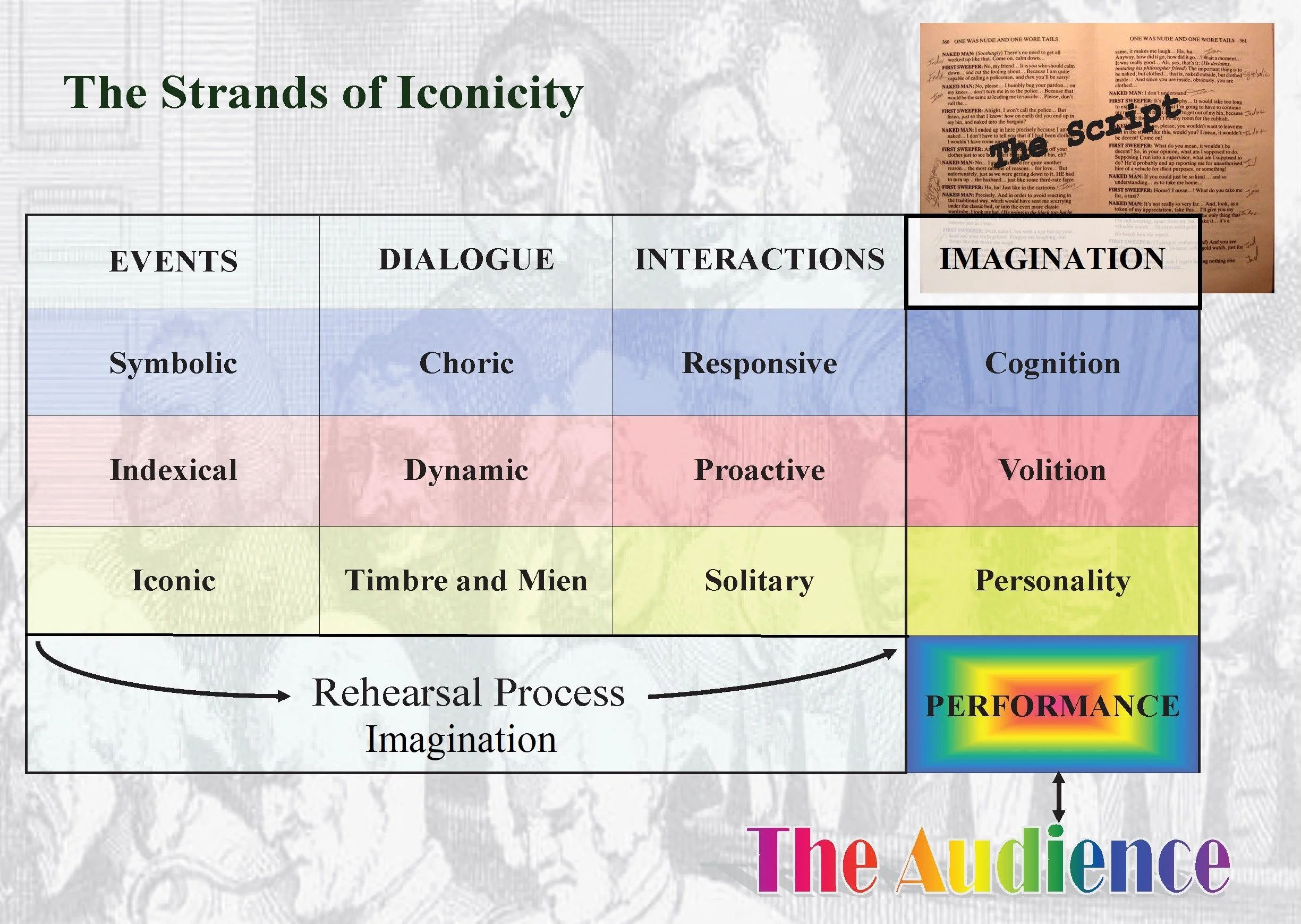
Figure 1: The strands of iconicity (Shapiro, p. 94-95)
During rehearsal, the actors inform their imaginations of precisely what must appear in the performance according to the three strands of iconicity. This information is cumulative. In the performance strand, the actor's imagination determines how everything appears, which is not the object of rehearsal. It is a spontaneous reinvention of the informed imagination. All three strands of iconicity are present in Helen's line of dialogue.
Creating a role. During rehearsals, the actors must focus exclusively, intensively, and precisely on imagining the sensory experience of each bit of imagery in all their lines. Exploring the totality of the iconicity eventually achieves the harmony of recognition that underscores the goal of creating a role.
However, this process is neither easy nor quick, and it requires what most actors learn on their first day of acting class: concentration. Actors need to be especially wary of distracting themselves with extraneous interpretive activities, such as noting actions or objectives, or dividing their dialogue into beats, or creating subtexts. Acting and performance are entirely imaginative, not interpretive activities.
Ensemble. Acting each bit of iconicity lasts only as long as its verbal presence. For example, the imagery in Helen's phrase, "the amorous count," lasts only as long as it takes her to say it. However, the actor playing Bertram—the amorous count—needs to watch Helen's rehearsal of this shared imagery. In other words, rehearsing collectively communicates otherwise brief, isolated perceptions between the actors.
Since all the characters in a play share a great deal of the same iconicity, their mutual yet individual experiences of it underpin the creation of an ensemble performance. Thus, an ensemble is not simply a group of actors working together, but rather a group of actors woven together organically by the iconicity in the play they are performing.
Dramatic action. The nexus of iconicity directs the actor's focus during rehearsal. What is syntax on the page becomes a visual cognitive map of all the connected iconicity:
(May be) > (the amorous count +> solicits her) > (In the unlawful purpose.)
(Index) > (icon +> index) > (symbol)
The dramatic action in Helen's line is the movement from one perceivable image into the next. Although the second and third images combine, the imagery of each is distinct. With practice, the actor recognizes the rhythms of this movement as the fluency of iconicity.
While reading initiates the actor's awareness of this movement, rehearsing with a script suspends the experience of its fluency. So it is imperative that all the actors quickly memorize their dialogue so that they can rehearse their roles "off-book."
Cognitive load. Iconicity rehearsals place a high cognitive load on the actor's imagination. For example, Helen has many lines densely laden with iconicity. In addition, the actor playing the role must perceive all the imagery Helen hears, as well as the imagery she shares with the other characters. All of it informs the background context for the actor's album of iconicity.
Performance: the appearance of the imagination
Reinventing iconicity. While rehearsal creates afferent data for the actors' albums of iconicity, performance is the efferent, harmonious appearance of the iconicity stored in those albums. The actors' imaginations spontaneously effectuate this appearance as an ensemble of reinvented iconicity.
Nexus. In performance, the fluency of iconicity becomes a current. So the actors cannot pause along the way as they frequently must do in rehearsal while they are discovering and establishing the rhythm and tempo of the current. In performance, they must act fluently, keeping time with the current of iconicity, which provides the energy of the performance.
Precision. As with rehearsal, maintaining the current of iconicity requires a high degree of concentration, focus, and precision. Precision in particular ensures that extraneous distractions do not disrupt the current. Precision cuts out excess or irrelevant imagery, allowing the essential iconicity to appear more clearly. Precision also clears the efferent pathways of the imagination from the performer's brain to the temporal habitats of their voice and body.
Affect. Iconicity is frequently laden with affect, which accounts for the distinctly emotional character of acting. As Oscar Wilde said, "From the point of view of feeling, the actor’s craft is the type" (Wilde, p. xiv).
For example, in another of Helen's lines, she is in tears, lamenting not the death of her father, but the absence of Bertram:
I think not on my father, 80
And these great tears grace his remembrance more
Than those I shed for him. What was he like?
I have forgot him. My imagination
Carries no favour in’t but Bertram’s.
I am undone: there is no living, none, 85
If Bertram be away (1.1.80–86).
In lines 81-82, Helen is in tears, a state of heightened affect. But in lines 80 and 82-83, the affective stimulus lightens as she tries not to think of her father. When thoughts return to Bertram in 83-84, her distress-anguish intensifies again, peaking at the end of 85, "there is no living, none." It then diminishes slightly in 86. This affective flow between high and low levels of distress-anguish creates the rhythm of affective imagery in performance.
In rehearsal, timbre and mien facilitate the imagined sensory experience of affect that produces afferent information, not only for the actor's album of iconicity but also for the affect system. In performance, that iconicity becomes the stimulus that spontaneously triggers the same affect, distress-anguish, with immediate authenticity.
The challenge of iconicity
What remains challenging for actors doing iconicity is trusting their imaginations to provide the creative impulse necessary to satisfy its demands. Without that trust, the liminal boundary separating rehearsal from performance becomes a foggy no man's land. As it is for all the arts, the light of trust illuminates the imagination because it is the most direct route to truth, where imagined things agree with themselves.
References (annotated):
Aristotle. (1995). Poetics. Translated by Stephen Halliwell. Cambridge, MA: Harvard University Press. This much-discussed work is also foundational to drama studies. Aristotle describes mimesis as having three parts, object, medium, and mode. The dramatist creates the object, expresses it in media that actors use to turn (tropos) the object into its appearance (opsis). The three parts contain the six elements: action, character, thought – language, musicality – performance.
Gadamer, H. (1986). Truth and Method. New York: Crossroad. Gadamer attributes the concept of the hermeneutic circle or cycle to Heidegger, but he expands on it in several places.
Longinus. (1995). On the Sublime. Translated by W. H. Fyfe. Revised by Donald Russell. Cambridge, MA: Harvard University Press. The work is more relevant to how the voice expresses perceptions of imagery through phantasia, "image productions," "You seem to see what you describe and bring it vividly before the eyes of your audience."
Shakespeare, W. (2019). All's Well That Ends Well. Editors Gossett, S. & Wilcox, H. Bloomsbury, Arden Shakespeare, Kindle Edition. Line numbering may differ in other editions.
Shapiro, B. (1999). Reinventing Drama: Acting Iconicity Performance. Westport: Greenwood Press. Details about the strands of iconicity and the use of Peirce's semiotics are more thoroughly explained here.
Tomkins, S. (1962-1991). Affect, Imagery, Consciousness, Volumes I–III. New York: Springer. The foundations of the affect theory of the emotions as alluded to in the present essay, also describes an afferent / efferent system and affect scripts as cognitive information.