Dr Miranda Anderson is a philosopher of the arts and humanities and a philosopher of mind. Her research focuses on cognitive approaches to culture, and she is available to review cultural works, including exhibitions and performances. She is the author of The Renaissance Extended Mind (2015) and co-editor of four volumes on Distributed Cognition between Classical Antiquity and Modernism (Edinburgh University Press, 2018-20).
A post by Miranda Anderson
Understanding imagination as something that is not merely brain-bound or individualistic can help to expand our ambitions for the development of technologies including artificial intelligence. Constraints in our intelligence, including our imaginative capacities, have been associated by Richard Gregory with constraints in our technologies; on his view, human intelligence is largely artificial intelligence because of the ways in which our technologies act as ‘mind tools’ that augment onboard biological capacities (1981).
There is a glitch between our recognising the crises underway in the twenty-first century – and doing something about them – at the heart of which is the blinkering and harnessing of our imaginations. Paul Gilroy argues that online filtering of information weakens our imaginations generating a sense of apathy and loss of hope (2025). Narrow and corporate control of current technological developments exploit and worsen the perceived diminution of the meaning of our lives, eroding the will to challenge it. Ironically these technological aims and methods are propagated by our fellow human beings who thereby exhibit the truncation of imagination they implant in others. Even in the narrowest sphere of self-interest their activities are self-harming and undermine the security and thriving of the earth on which they along with all of us live.
Supposedly optimised versions of reality being pushed at us not only by social media and other online platforms, accustomise us to interpreting and framing our realities in ways that inculcate superficial desires and anxieties. Cory Doctorow vividly depicts the ‘enshittification’ of our virtual and real world domains through the consolidation of tech companies, lack of competition, and failures in their regulation and enforcement of existing laws. This issue is fundamental to all the crises we face: ‘The internet isn’t more important than the climate emergency, gender justice, racial justice, genocide or inequality. But the internet is the terrain we’ll fight those fights on’ (2024). As one symptom of the issue, consider the non-human agents we encounter for services spanning consumer products to health services. Recall your last chat or phone call with a bot – fashioned to mimic, flatter and mine their human interlocutor, while presenting their knowledge as objective, despite the partiality of its data-mined basis. Yanis Varoufakis uses the term Technofeudalism to capture our being rendered as ‘unpaid servants, whose job is to provide our information, our attention, our identity and above all the patterns of behaviour that train their algorithms’ (35) – notably, when attempting to read Varoufakis’ book, I could only do so via a virtual platform that made me download software and then only licensed it to me for a limited period! On your next commute observe your fellow passengers operate in automatic mode while their minds traverse across virtual realms, at times taking liberating imaginative flights but too oft due to the nature of the algorithms directing their attention and pruning their linguistic range instead becoming mired in dross.
There are common features across forms of artificial and human intelligence: an important one is that they both use predictive processes. AI predictions are based on algorithms and data scraped or fabulated out of human generated sources. In us they are based on prior developmental and evolutionary experiences. Some philosophers, including Jakob Howhy (2013), Thomas Metzinger (2004) and Anil Seth (2017), posit that consequently all we experience are controlled hallucinations. Rendering experience in the world and sentient experience as imaginary serves to uproot ethics and fails to acknowledge the diverse levels of resonance across human and other earthly physical entities. Given the brain’s physical nature, not only do embodied and embedded actions in the world ground cognitive capacities, but quantum properties entangle aspects of our minds, selves and world across time and space (Liu et al 2024; Anderson 2023, 2026).
Habitual modes and cognitive defaults minimise energy expenditure, yet repetitive prior experiences entrench the weighting of certain future predictions narrowing the range of our cognitive horizons, as evident in our development and use of new technologies. Consider Large Language Models (LLMs), an area that led awareness of how powerful artificial intelligence can be by widening our capacity to create and assess large datasets. LLMS have entrenched and amplified the injustices of past and present value systems, as well as exposing the problematics of the bias embedded in their datasets, enabling the possibility of re-evaluation of marginalisation and elision of sectors of our society and world. Another conflicted example is the impact that search engine algorithms have on our imaginative scope, seeming to widen our range yet directing attention and curtailing linguistic associations. Frederick Kaplan described how words are limited to merely economic values through the auction of keywords by search engines. Pip Thornton creates works that list the relative values allotted to words in poems such as Wordsworth’s ‘Daffodils’ poem, illustrating the inflation of terms such as ‘crowd’ and ‘host’, which have advertising domain value.
What further exposes the tragic nature of these curtailments of technological potential are the diverse kinds of simulative practices across the sciences transforming our understanding, which increasingly utilise forms of artificial intelligence. For example, it is through computer simulations of the brain’s reward system that it is now understood that rather than ‘a single mean’ being anticipated, a dopamine array represents ‘multiple future outcomes simultaneously and in parallel’, with this weighted probability distribution recalibrated through each successive engagement (Dabney et al 2020). This new understanding provides a basis to defend the value of the arts for development of our imaginative capacities. Through providing new modes and forms of thinking and being, artworks generate a reweighting and opening out of these distributed dopamine arrays, enabling more imaginative, complex and nuanced future predictions (Anderson 2022). These neural effects relate to what occurs through social play in the young: it produces a dopamine surge and leads to more developed prefrontal cortexes, which are correlated with behavioural adaptivity, emotional development, and cognitive flexibility (Bell et al 2010; Vanderschuren et al 2016; Woolston 2021). Conversely, recent evidence shows that there is a surge in young people with mental health issues in high-income countries which is correlated with excessive social media use through it negatively impacting the functioning of these same neural systems: the ventromedial prefrontal cortex and the brain reward system.
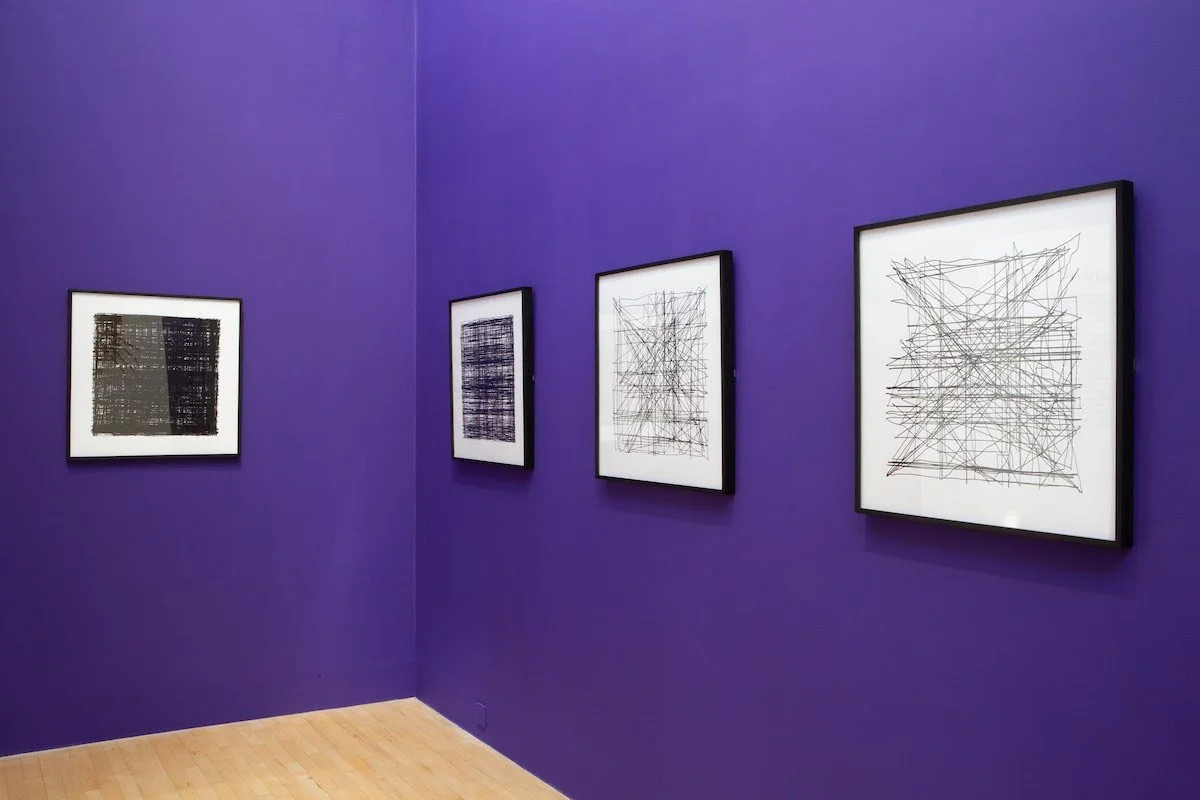
Image credit: Agnieszka Kurant & John Menick, ‘Production Line’, 2015-ongoing, pen plotted images. Installation view, ‘The Extended Mind’, 2019. Image courtesy Talbot Rice Gallery, The University of Edinburgh
‘Production Line’ (2015) is a series of pen plotted images, which used Amazon Mechanical Turk, then known for paying people less than a $1 an hour. The Turkers are given a starting point of where a previous line ended and each add a single line, till an algorithm assembles all the individual lines up to a preset number. This work reveals the cumulative nature of creativity, and the exploitative nature of both online employment practices and of the artworld, which also exhibits the unjust hierarchies of present and past cultures that constrain the rewarding of credit to the few people enabled to imaginatively envision a work.
There is a fission-fusion dynamic between imaginations and artworks: autobiographical memories enable us not only to recall our past, comprehend the present and anticipate the future, but also to imagine fictional scenarios (Hassabis and Maguire 2007; Mullally 2012). In the process the memories are recalibrated, as a revitalising opening out of the arrays of associations occurs through the way in which literary language combines an opening out of associations with literary devices that orient attention and create vivacity. Hence a relatively safe developmental potential is offered by artworks, which can also counteract and supplement the increasing resistance to imaginary play experienced by adults. The ‘weak and imperfect’ nature of our imaginations of which Hume complains in his Treatise of Human Nature thus turns out to be their strength: enabling more open-ended free play (1.3.10.10). Artistic devices then nudge and catalyse new perceptions through acting as stand-ins for the types of attention directing scaffolding provided by physical environments or explicitly used in scientific modelling artworks (Kind 2018), opening up potential for change to ourselves and the world (Anderson 2022, 2026). Yet at the same time as the need for imaginative creativity and flexibility are increasingly being foregrounded as essential skills, even when humans are considered merely in terms of their economic value (World Economic Forum 2025), human artists are being exploited without fair recompense (2024).
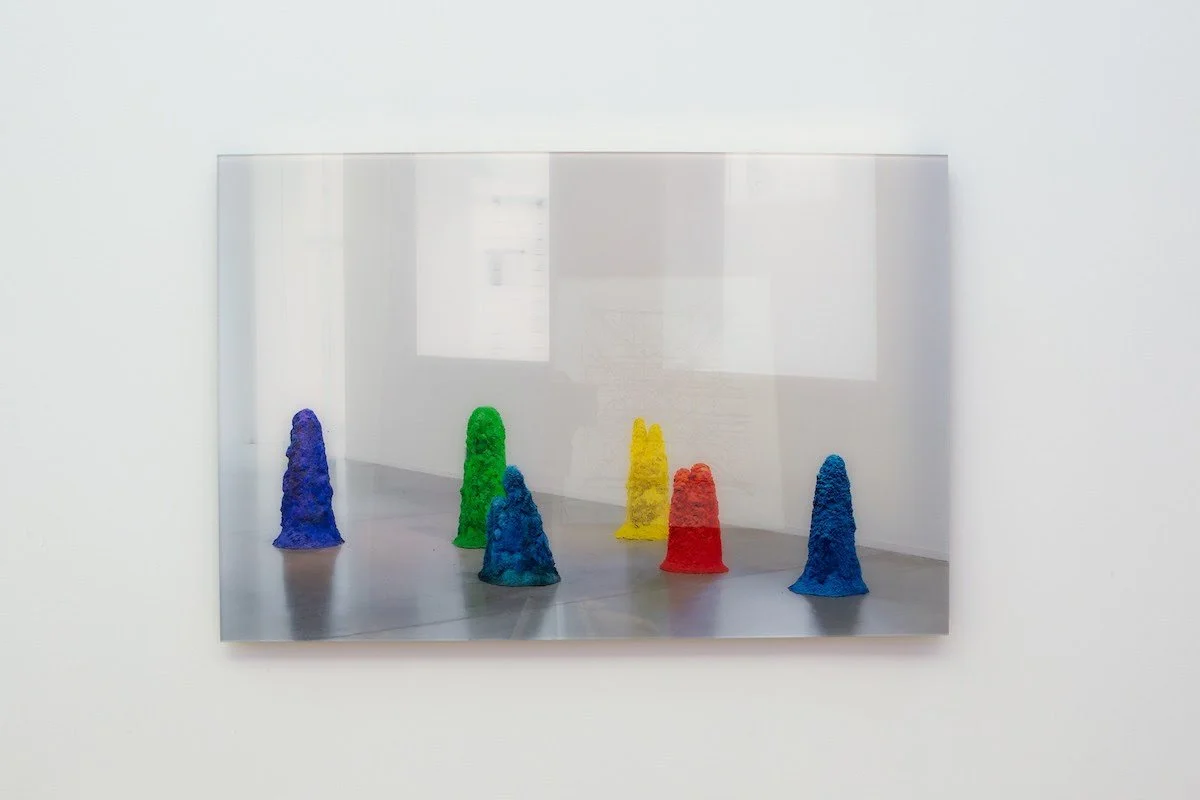
Image credit: Agnieszka Kurant, ‘A.A.I.’ [photographic representation], 2019, (mounds built by colonies of termites out of coloured sand). Installation view, ‘The Extended Mind’, 2019. Image courtesy Talbot Rice Gallery, The University of Edinburgh
A.A.I., outsources the act of creation to termites who unwittingly create Kurant’s artworks out of mounds built of coloured sand she supplies them with, illustrating how tech companies silently exploit our play on their platforms for their profit.
C. Thi Nyugen presents games as offering developmental potential: through immersing us in a ‘narrowed evaluative attitude’ with a ‘narrow goal’ we may then shift into a more ‘open-ended, sensitive’ reflection (2020: 221). Nguyen terms this ‘value capture’, but arguably it might better be termed ‘fission-fusion values’: game roles, or artworks or reality are shaped by and shape us. Scope-narrowing in real-life roles can helpfully focus behaviours, as Nyugen observes, but another potentially positive outcome is a self-awareness that increases the capacity to shift between narrowing and more complex agential modes. A similar flexing and recalibration can occur in our fission-fusions with artworks, oft further enriched by the ways they enable imaginative exploration of the complexities and nuances of value systems and our entanglement with them. Nyugen describes other art forms as ‘recordings’ which implies their relative passivity (2020: 1-2). Research on the relation between memory, perception and the imagination combined with the claim that artworks expand our minds suggests instead their dynamic and active playing out across our minds and selves.
This has ethical consequences: by feeling their way into and beyond the edges of the known, artworks enable the creation of more critical, creative and compassionate thinkers. Of late there has been much discussion about political freedom and freedom of speech, yet without freedom of thought, no other kind of freedom is possible. Artworks enable us to conceive of forms of intelligence other than our own, a capacity which will be more needed than ever for us to harness the possibilities of artificial intelligence to tackle the crises we as a species face. Our imaginations need the limbering up that the arts provide us with in order to engage ethically with ever-evolving ideas and environments, and to resist the mind-shackling nature of mere observance to current ethical norms.
References
Bell, H. C., S. M. Pellis, B. Kolb (2010) ‘Juvenile peer play experience and the development of the orbitofrontal and medial prefrontal cortices’. Behavioural Brain Research 207: 7–13.
Dabney, W., Kurth-Nelson, Z., Uchida, N., Starkweather, C. K., Hassabis, D., Munos, R., & Botvinick, M. (2020). ‘A distributional code for value in dopamine-based reinforcement learning’, Nature.
Doctorow, Cory (2024) ‘Enshittification’ is coming for absolutely everything’, Financial Times, Feb 8 2024.
Gilroy, Paul (2025) ‘Protest, Progress, and Post-Imperial Pathology’, Resistance: How Protest Shapes Britain and Photography Shaped Protest. Compiled by Steve Mc Queen and edited by Clarrie Wallis with Sarah Harrison.118-125.
Gregory, Richard L. (1981) Mind in Science: A History of Explanations in Psychology and Physics. Cambridge: Cambridge University Press.
Hassabis, Demis and Eleanor A. Maguire (2007) ‘Deconstructing episodic memory with construction’, Trends in Cognitive Sciences 11.7.
Hohwy, Jakob (2013) The Predictive Mind. Oxford: Oxford University Press.
Kind, Amy (2018) ‘How Imagination Gives Rise to Knowledge’, Perceptual Imagination and Perceptual Memory, edited by Fiona Macpherson and Fabian Dorsch. OUP: Oxford.
Liu, Zefei, Yong-Cong Chen, and Ping Ao (2024) ‘Entangled biphoton generation in the myelin sheath’, Physical Review: 1-9.
Metzinger, Thomas (2004) Being No One: The Self-Model Theory of Subjectivity, 52. Cambridge, MA: MIT Press.
Mullally, Sinéad L and Eleanor A Maguire (2013) ‘Memory, Imagination, and Predicting the Future: A Common Brain Mechanism?’ Neuroscientist 20.3: 220-34.
Nguyen, C.T. (2020) Games: Agency as Art. Oxford: Oxford University Press.
Vanderschuren, L.J.M.J., E.J.M. Achterberg, and V. Trezza (2016) ‘The neurobiology of social play and its rewarding value in rats’, Neuroscience Biobehavioural Review 70: 86–105.
Varoufakis, Yanis (2023) Technofeudalism: What Killed Capitalism. London: Bodley Head.
Woolston, C. (2021) ‘The puzzle of play’, The Mind.